A Golf Cart Ride Through An Automated World
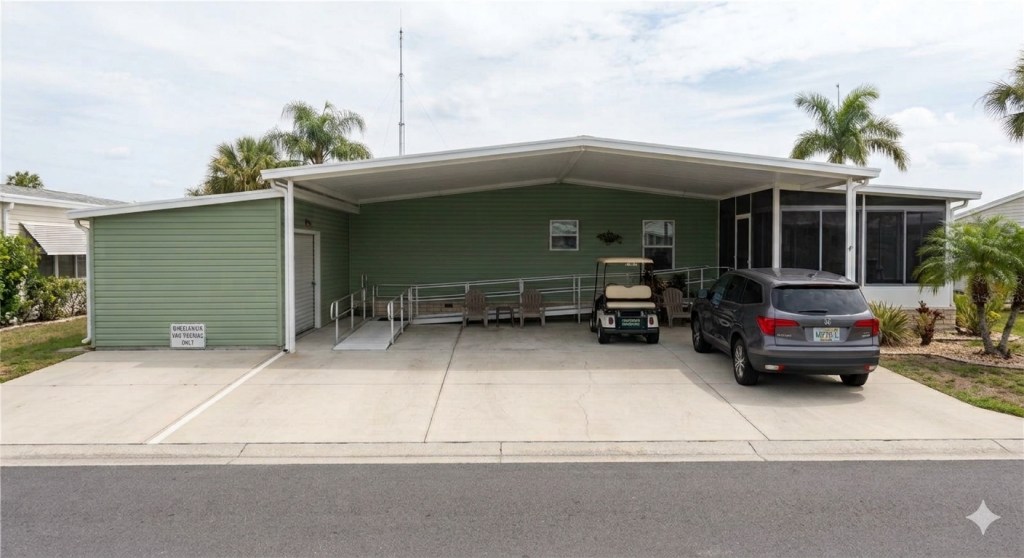
My recliners are OFF the air at the N4FTD QTH this morning. I’m sitting in Recliner-2 in my shed-shack, and I can barely see the transceivers behind a pile of legal paperwork topped with a vehicle bill of sale. That stack represents the temporary obstacles keeping this operator off the airwaves—and taking up the mental bandwidth I’d usually spend chasing signals. I say “temporarily,” because I’m determined to work through them and get back on frequency soon—Lord-willing and the creek don’t rise!
While I’m currently too busy to operate, I’m still taking time to reflect. The past year has been a bit of a whirlwind, yet I feel anchored. Sitting here sipping coffee as the sun rises over Lake Arrowhead Mobile Village, I’m mostly counting my blessings. God is firmly in charge; I am certainly not! Some may say that God doesn’t know what He’s doing. I respectfully disagree. If you stick with me, I’ll explain why.
My vanity license plate, N4FTD, used to sit on the bumper of a camper van. Today, it’s mounted on a mobility van built for one primary mission: taking my wife, Sue, wherever she needs and wants to go. A year ago, Sue’s mobility challenges meant my camper trips were solo endeavors. Though her physical needs have increased since then, the mobility van allows us to venture out together—even if our range is shorter. I’ve learned that shorter journeys can still take you to entirely new places.
My old camper van took me on a 5-day POTA rove along Florida’s east coast, right beside that massive saltwater amplifier known as the Atlantic Ocean. Before that, it carried me on a month-long, 3,000-mile loop up to Pottsville, Pennsylvania—home of Yuengling, my favorite cold drink next to good ’ol ice water. I crossed the Chesapeake Bay Bridge-Tunnel, tracked up the DelMarVa Peninsula, drove the entirety of Skyline Drive, and logged miles along the Blue Ridge Parkway (POTA US-3378) down to Cherokee, North Carolina. Plenty of POTA activating on that trip!
Those freeform radio adventures were wonderful, but something was always missing: my lifelong partner wasn’t in the passenger seat.
Today, my travel radius has compressed from a 3,000-mile cross-country loop to a 1-mile circuit around my neighborhood. Instead of driving a camper van with a 12.8 kWh power plant, I ride on top of a 5 kW golf cart that has become my primary “thinking machine.” If I were drafting my own life plan, a full-time caregiver lifestyle wouldn’t have been on the blueprint. I checked—Sue agrees. Neither of us planned on “driving a hospital bed” through the living room. But Someone else is at the wheel, and it’s not about the destination; it’s about the journey.
Planes, Trains, and Mobility Vans
Which brings me to transportation. Reliability is everything when your vehicle is a lifeline. If your power plant fails, your entire world shifts in a second, and every plan is on hold until transportation is secured.
Right now, that mobility van is missing, leaving a glaring empty spot in the driveway just six feet north of my shed-shack window.
It started two weeks ago while loading Sue into her rear-entry wheelchair ramp. I pressed the key fob to close the hatch—nothing. The engine wouldn’t turn over either. The battery was dead. With the Florida sun pushing past 90 degrees, my first priority was getting Sue safely back into the house’s air conditioning.
That’s when I learned a frustrating quirk about modern modified vans made by a particular American carmaker: the power rear hatch relies entirely on the electrical system. If the battery dies while it’s closed, you can’t open it from the outside and you can’t get to a manual release lever from the inside. That rear hatch is Sue’s only way out. A quick search revealed an obscure retrofit kit—a manual safety door release. I had the van towed to the dealer, ordered the manual override, and had them put in a new battery.
While chatting with Mike, my salesperson, I made it official: “I’m in the market for a side-entry van.”
I wanted a setup where the front passenger seat could be removed so Sue could ride right next to me—where she’s sat for 49 years of marriage and three years of courtship. More importantly, I wanted a factory-engineered manual override for the side door and ramp. As divine timing would have it, Mike mentioned a pristine, used side-entry Toyota that had just arrived on the lot the day before. I took a look. It had the exact manual overrides and front-passenger wheelchair tie-downs we needed.
A week later, after bringing our original van home with its new battery and manual hatch pull, the electrical phantom struck again. Dead as a doornail. 0 volts.
It turns out these modified vans run a dual-battery setup (Main + Auxiliary), and an oversight in the shop left an old, failing auxiliary battery connected in parallel to the brand-new main battery. Over six days in the driveway, the dead secondary battery drained the new one completely dry.
So back to the shop it went.
Which brings us to this morning. The van is fixed, but Mike and the dealership owner also made an offer to trade it toward that side-entry Toyota. I spent part of my weekend using AI to compile market data and structure my talking points for a counter-offer. I would soon enter a negotiation with Mike—one human talking to another.
I say “human-to-human negotiation” on purpose. In some futuristic vision of tomorrow, according to a futuristic YouTube video I watched recently, my AI agent might negotiate directly with the dealer’s AI agent. That may be where tech is headed, but as long as I have agency, I prefer doing business person-to-person with another human being—even if I use a little digital assistance on the side to double-check my facts.
With the negotiation set for Monday, I finally have a quiet weekend to sit back and reflect. My mind keeps returning to a spin I took in my golf cart a few days ago, right before these vehicle roadblocks boxed me in. At least that power plant is reliable—and it offers a quiet venue to think through the true soul of radio operating, away from the clutter on my desk.
So, grab your hat and fasten your seatbelt. Next week, in Part 2, we’re taking a ride on my thinking machine—where a van crisis meets the heart of a real-world operator.
Have a thought, question, or story to share?
Feel free to leave a comment below for the community, or drop me a private note at my feedback address if you’d prefer to ragchew one-on-one.
73, Paul | N4FTD | recliners.on.the.air@gmail.com
“Radio is better in the recliner, no matter where you park it!”


Leave a Reply